.png)

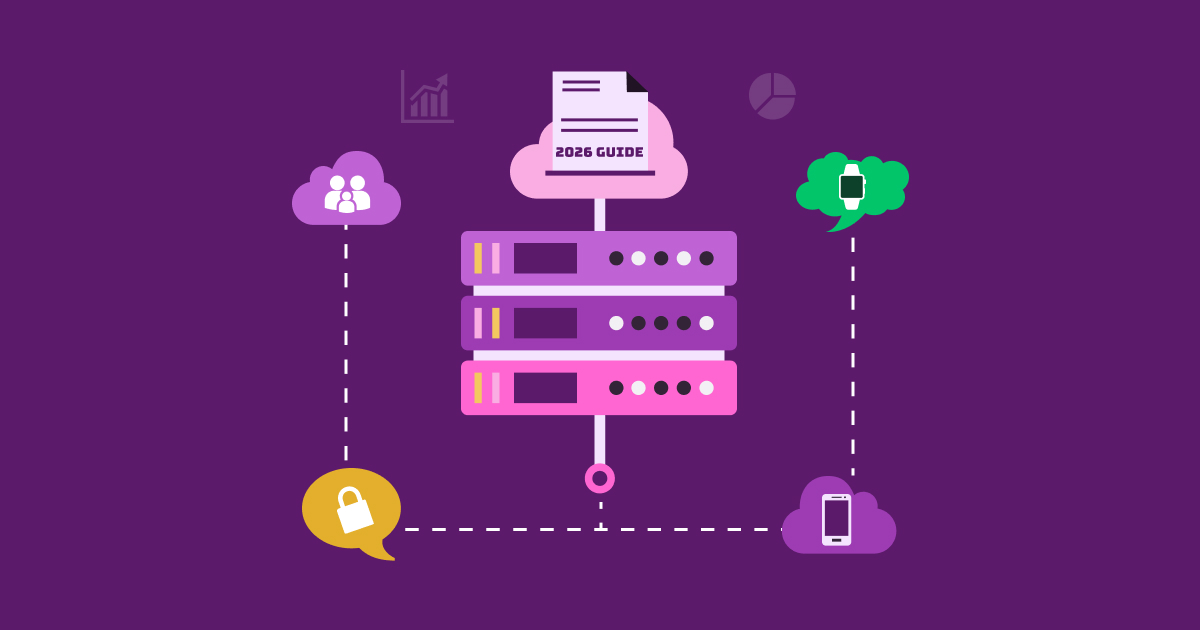
What Is Entitlement-Server-as-a-Service (ESaaS)? The 2026 Operator’s Guide
Picture the moment a customer opens a brand-new phone. They tap “transfer my eSIM,” expect their number to jump across in a few seconds, and then they wait. No signal. Wi-Fi Calling greyed out. Fifteen minutes later they are on the phone to your support line, and the shine has come off the whole upgrade.
Hiding behind that bad morning is a single yes-or-no that either fired in time or did not. It is called the entitlement decision, and for most of the last decade operators treated it as plumbing. In an eSIM-first world, it has quietly become one of the busiest and least forgiving calls your network makes, millions of times a day. That is exactly the problem Entitlement-Server-as-a-Service is built to solve. Instead of building the software, wrestling the device-side complexity, and staffing the on-call rotation that comes with it, you consume the entitlement decision as a managed service and point your own teams at the network and the customer.
This guide walks through what Entitlement-Server-as-a-Service actually is, why the timing changed, how it differs from running an entitlement server yourself, and the questions that separate a serious provider from a hopeful one.
What is Entitlement-Server-as-a-Service (ESaaS)?
Entitlement-Server-as-a-Service (ESaaS) is a managed platform that makes the real-time entitlement decision for a mobile operator. It works out whether a specific subscriber, on a specific device, in a specific market, is allowed to use a service like Wi-Fi Calling, VoLTE, eSIM activation or a smartwatch on their number, and it speaks the device-facing GSMA TS.43 protocol so the operator does not have to build, host or maintain that layer in-house. In plain terms, it is the same capability as a traditional entitlement server, delivered as a subscription: multi-tenant, cloud-native, and wired into your existing systems rather than replacing them.
The word that matters here is “service.” An entitlement server is a thing you deploy and run. ESaaS is that thing run for you, with the device lifecycle, the certification work, and the operational assurance all absorbed by the provider. If the plumbing itself is new to you, our explainer on the difference between entitlement, authorization and provisioning servers draws the boundaries, and if you are wondering why this is not just “telecom OAuth,” our piece on why TS.43 authentication is nothing like OAuth, IAM or Zero Trust is worth ten minutes. This article stays on the bigger question: why so many operators now choose to buy this capability instead of build it.
Hold on, why does one small decision matter this much?
Fair question. Three things happened at once.
First, eSIM stopped being a novelty and became the default. GSMA Intelligence projects that eSIM will make up roughly 76% of all smartphone connections, about 6.7 billion of them, by 2030 (GSMA Intelligence). Think about what that changes. The SIM is no longer a chip a customer slots in once and forgets. It is a profile that gets ordered, transferred, replaced and paired to companion devices, and every one of those moments is an entitlement decision waiting to be made.
Second, the machines showed up too. Counterpoint Research expects a further 2.2 billion IoT connections to run on eSIM by 2030 (Counterpoint Research). Cars, watches, industrial sensors: all of them now lean on the same entitlement layer your phones do.
Third, the money followed. The broader eSIM market is valued at roughly USD 13.8 billion in 2025 and is forecast to reach USD 48.7 billion by 2034, growing at close to 14.6% a year (IMARC Group). Markets that grow like that do not leave their supporting infrastructure alone for long.
There is a fourth shift worth naming. As operators open their networks through standard APIs, the entitlement layer stops being a private implementation detail and starts getting touched by partners and enterprises. Operator groups representing about 65% of the world’s mobile connections, spread across 239 networks, have already committed to GSMA Open Gateway (GSMA). Once that layer is exposed, it has to be dependable, observable, and quick enough to answer inside a device’s timeout window.
Put those together and you can see why analysts now track the entitlement server as a category of its own. Counterpoint’s 2025 Global Entitlement Server Landscape calls the market one “approaching an inflection point,” with the energy shifting away from legacy network-core vendors and toward agile, cloud-native providers. That shift is precisely where Entitlement-Server-as-a-Service lives.
Entitlement server or Entitlement-Server-as-a-Service? The difference in one line
Here is the cleanest way to hold the two apart.
An entitlement server is the software component that implements GSMA TS.43. It authenticates the device, checks policy against subscriber and network context, and hands back a token that switches a service on or off. Whether it sits on-premise, in a private cloud, or in some hybrid arrangement is a deployment choice, and our guide to entitlement server deployment models covers the trade-offs.
Entitlement-Server-as-a-Service is that same capability delivered as an operated subscription. The provider runs the software, keeps up with the specification, maintains the device-certification lab, carries the SLA, and meters the usage, while you keep your systems of record and your customer relationship. The difference is not cosmetic. Own the server, and you own everything downstream of it: the release cycle, the endless OEM test matrix, the odd failure modes, the 3 a.m. page when a new handset generation ships behaviour nobody expected. ESaaS hands that weight to a team whose entire job is to carry it. If you want to build anyway, our scalable entitlement system best practices will save you some scar tissue.
So how does it actually work?
Under the hood, ESaaS follows the same standards-defined flow as any compliant entitlement server. The value is in how reliably and transparently it gets operated.
A device sends a request over the TS.43 interface, on cellular or on Wi-Fi. The platform authenticates it, usually with EAP-AKA over the mobile network, falling back to an OTP-backed check over Wi-Fi when cellular authentication is not available. If you want the exchange step by step, we traced how a device goes from EAP-AKA to an access token, and our closer look at the tokens and credentials that authenticate a device explains why this trust model looks nothing like the web-app world. Once the device is trusted, the platform checks entitlement policy against subscriber, device and market context, then returns a decision the device acts on, all inside the tight timeout the handset allows. Do that well, and the customer never notices. Do it slowly, and they see a hang.
Activation-heavy journeys go further. Ordering an eSIM profile, moving a number to a new phone, pairing a watch: these run through the On-Device Service Activation (ODSA) procedures, which orchestrate longer, multi-step operations. Our explainer on how ODSA activates primary, companion and IoT devices shows where most real-world complexity actually lives, and why a half-finished activation can strand a profile if the platform has no clean way to roll back.
Now the part operators quietly dread: device diversity. TS.43 is not implemented identically across manufacturers, and Apple and Samsung in particular each have their own quirks, with every new handset generation nudging the target. We unpacked this in how entitlement servers support Apple and Samsung devices. Keeping current with that matrix is a treadmill, and staying on it is exactly the job ESaaS takes off your plate.
What can you actually launch with it?
The point of all this is not compliance for its own sake. It is the services the entitlement layer unlocks. Every item below is, at heart, one entitlement decision you need to get right:
- Wi-Fi Calling and VoLTE or VoNR. Customers notice these the instant they break, and they are the services most likely to fail the moment a subscriber roams or drops to Wi-Fi only if the entitlement flow is not handled correctly.
- eSIM activation, device-to-device transfer and remote SIM replacement. These are the moments that decide whether someone switching phones stays with you or churns, and where cutting onboarding time with a compliant entitlement flow turns friction into a retention win.
- Smartwatch on one number, plus tablet and laptop add-ons. The multi-device propositions that lift ARPU and attach rate, all of which ride on companion-device entitlement.
- Emergency-calling compliance. The one case where the entitlement layer must never fail closed, and where fail-safe behaviour has to be a deliberate design choice, not an accident.
Our overview of entitlement server use cases across wearables, eSIM, VoWiFi and silent authentication maps these in more depth. The common thread is simple: every one of them is revenue or retention riding on a decision that has to be fast and correct, at massive scale.
Want to watch these flows behave on a live platform? Book a demo with our team and we will walk your device, BSS and care people through the journeys that matter most to you.
Build it yourself, or buy it as a service?
Plenty of operators start with the instinct to build. The entitlement server is standards-based, the spec is public, and a strong engineering team can absolutely stand up a working version. Our own step-by-step guide to implementing an entitlement server lays out that path in full.
Here is the catch. The working version is the easy 20%.
The other 80% is what shows up later. It is the certification lab that has to validate every new handset family before your subscribers ever meet it. It is the behaviour under stress, what the platform does when the BSS is slow or a lookup times out, which done badly is how Wi-Fi Calling silently dies for a whole region while your dashboards stay green. We wrote a full piece on what happens when an entitlement server is unreachable precisely because these failure modes are the part teams underestimate most. And it is the roadmap tax: every hour spent maintaining TS.43 conformance is an hour not spent on the network or the customer.
That calculation is the whole case for Entitlement-Server-as-a-Service. The device side, the part that never stops changing, gets absorbed by a provider who maintains it across the entire operator base, so the cost of staying current is shared instead of shouldered alone. You get the business benefits of a TS.43 entitlement server without the standing burden of running one. For most operators outside the very largest groups, that is not a shortcut. It is the more defensible engineering decision.
What to demand from an ESaaS provider (and the questions that expose a weak one)
Not all managed entitlement is equal. The questions that separate a serious provider from a hopeful one are structural, not promotional. When you sit down with a vendor, and when your procurement and security teams do too, push hard on these:
Does it slot in without ripping anything out?
A credible ESaaS platform connects to your estate through a bounded set of defined ports and leaves your BSS on its existing interfaces. No system-of-record migration, no data lift. If a provider’s story opens with replacing something you already run, treat that as a warning sign.
Where does my subscriber data live, and can I choose my isolation?
Data should stay in the jurisdiction you nominate, and you should be able to pick your posture, from shared multi-tenant all the way to deployment inside your own estate, without negotiating exceptions. Residency should be a property of the architecture, not a promise in a clause.
Do my credentials ever leave my control?
The strongest designs place a secure edge inside your environment, so your credentials reach your AAA and HSS without ever entering the provider’s platform. Your CISO will ask this first, and our guide to security in entitlement servers covers the full threat model, from privacy to fraud.
What happens when something breaks?
Behaviour under stress should be configurable per service class, never a single platform-wide default, so voice never fails closed on a path that carries emergency calls.
Can I audit the bill, and is there a real SLA?
You should be able to see exactly which decisions are billable, with cache hits inside a validity window left uncharged, and you should be able to hold the provider to availability and latency targets with defined measurement points. Before you sign anything, our deployment checklist for carriers and OEMs is a useful gut-check.
U2opia’s Entitlement-Server-as-a-Service was built around exactly these principles: carrier-grade, multi-tenant, residency-aware, and fail-safe on the emergency path. If you want to put it through your own security review, talk to our team and bring your hardest questions.
Who is this really for?
ESaaS is not one-size-fits-all, and the value shifts by operator type.
If you are a mobile network operator (MNO), the draw is getting off the device-side treadmill, the certification, the spec drift, the failure modes that only bite at scale, while you keep full control of the network and the customer. The entitlement layer stops being a standing engineering commitment and becomes a service with a number attached.
If you are an MVNO or MVNE, the case is even sharper. Building and running your own entitlement server rarely pencils out against a hosted-network model, yet the services it unlocks, Wi-Fi Calling, eSIM, wearables, are exactly what set a virtual operator apart. A multi-tenant Entitlement-Server-as-a-Service lets one platform serve many brands, each with its own policy, without a separate build for every one.
And if you are an IoT or device-led provider, where connections are heading into the billions on eSIM, the entitlement and activation layer is effectively the product. Get it wrong and it is not a support ticket, it is a device that never comes to life in the field.
The market is already moving this way
None of this is a hunch. Counterpoint’s 2025 landscape puts the established core-network vendors, Amdocs, Motive and Ericsson, in the incumbent seats, while pointing out that momentum is shifting toward agile, API-first providers that combine speed, flexibility and global interoperability. The category is maturing at the very moment the eSIM wave is cresting, which is why operators who still treat entitlement as an afterthought are becoming the exception rather than the rule.
For you, the strategic read is short. The entitlement decision is going to be made billions of times across your base, on a widening range of devices, under real regulatory and customer-experience pressure. The only questions left are whether you want to carry the cost and risk of running that layer yourself, and whether the model you choose lets you launch new services without a full platform programme behind each one. On that last point, a managed Entitlement-Server-as-a-Service changes the maths: new services become configuration on a decision core that is already proven, not a fresh integration project every time.
Where to start
If eSIM, Wi-Fi Calling, wearables or a wider device programme are anywhere on your roadmap, the entitlement layer is already on your critical path, whether or not it is on your project plan. The fastest way to de-risk it is to prove the full flow on your own network against a metric you already track, before committing to anything bigger.
That is where we start with every operator. See Entitlement-Server-as-a-Service in action with your device, BSS and care teams in the room, and we will set one success metric from your own baseline.
Frequently asked questions
1. What is the difference between an entitlement server and Entitlement-Server-as-a-Service? An entitlement server is the software component that implements GSMA TS.43 and makes service-entitlement decisions, and you deploy and operate it yourself. Entitlement-Server-as-a-Service (ESaaS) delivers that same capability as a managed, multi-tenant subscription, with the device lifecycle, OEM certification, operational assurance and SLA all carried by the provider. The capability is the same. The difference is who runs it.
2. Does adopting Entitlement-Server-as-a-Service mean replacing our BSS? No. A well-designed ESaaS platform connects to your existing estate through a defined set of integration ports and leaves your BSS on its current interfaces. Your systems of record stay in place, and no subscriber data is migrated to a new platform. The entitlement layer sits alongside what you already run.
3. Which services does Entitlement-Server-as-a-Service enable? It powers any service that depends on a real-time entitlement decision, including Wi-Fi Calling, VoLTE and VoNR, eSIM activation and device-to-device transfer, smartwatch-on-one-number and other companion-device propositions, and emergency-calling compliance. Each of these is an entitlement decision that has to be correct and fast, at scale.


.png)