.png)

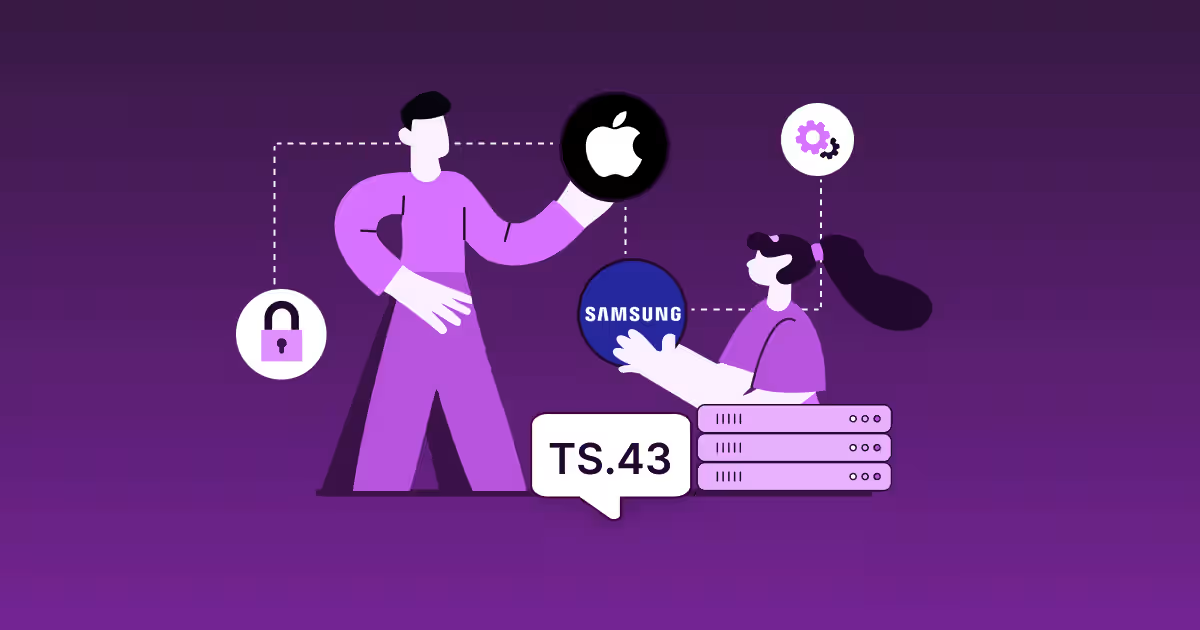
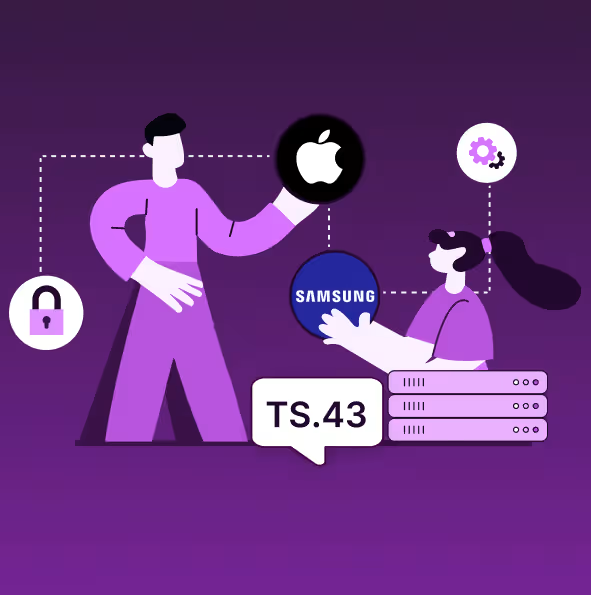
If you’re wondering how your iPhone or Galaxy always seems to know exactly what it can do and why activating new call features or mobile services happens so smoothly, you’re about to discover what really powers that experience. It’s not magic. It’s the new way telecom networks are using entitlement servers and the GSMA TS.43 standard to bring secure authentication and seamless service activation right into your pocket.
The Hidden Engine Behind 5-Star Device Experiences
Start your iPhone or Samsung, tap to activate a service, and instantly get access. That fluid journey is only possible because your carrier is using an advanced entitlement server. The server talks directly to your device, checking not just your SIM and subscription but the real network conditions. At the heart of this is GSMA TS.43. Forget long waiting times, confusing menus, or sending one-time codes. With modern entitlement servers, services like WiFi Calling, VoLTE, eSIM profiles, and even specialized companion device services all work pretty much out of the box, no drama.
Read: What is an Entitlement Server & Why It Matters for Telecom Operators
What Makes TS.43 So Important?
Here’s why TS.43 is a big deal for anyone who uses Apple or Samsung devices:
- It creates one common language for your phone and the network, so they agree on what features are allowed.
- Whenever you want to switch to a new service (think: activating a new profile or trying a new calling mode), your device quickly checks with the entitlement server using the TS.43 protocol.
- This check is instant, secure, and works whether you’re home or roaming with your device in another country.
- It’s built for today’s tech: eSIM, 5G voice, SMS over IP, wearable connectivity.
Imagine you’re getting a new smartwatch or dual-SIM phone set up. The entitlement server, following TS.43 rules, can handle the authentication, subscription match, and service activation dynamically, no customer support calls required.
Read: Use Cases of Entitlement Servers: Wearables, eSIM, VoWiFi, and Silent Authentication
Why Apple and Samsung Ask for More
Top device brands expect high standards from mobile networks. Apple’s iOS, plus iPads and Watches, rely on a mix of their own entitlement flows and open GSMA standards. Samsung is pushing innovation with Android, OneUI, and new wearables. Operators have to deliver a seamless entitlement experience, or risk frustrated users and lost business.
Here are some things users don’t notice, but matter:
- iPhone users demand instant activation of features like WiFi Calling. TS.43 makes this possible across carriers.
- Samsung’s advanced use of eSIM and companion device onboarding means the entitlement server is always checking and updating access rules.
- Wearable devices like Apple Watch or Galaxy Watch can pair and authenticate with your network smoothly, thanks to TS.43 under the surface.
- Old problems like support tickets, manual profile setups, or slow activations disappear when TS.43 entitlement logic runs automatically.
The Quiet Revolution in Authentication
With entitlement servers following TS.43, authentication is becoming silent, quick, and safe. Devices no longer depend on SMS codes or insecure manual steps. Instead:
- The SIM/eSIM and the network handle most of the validation in seconds.
- The server can use advanced verification, like EAP-AKA, without bothering the user.
- For security: TS.43 ensures that only the actual, entitled user and device get access, protecting services and reducing fraud.
- Operators can update entitlement rules in real time to handle new device types or launch fresh services.
Real-World Scenarios (No Hype)
Let’s get practical. Here are examples of how these systems support today’s users without any hassle:
- You buy a new iPhone. As soon as you insert your SIM or scan your eSIM QR code, your carrier’s entitlement server checks if your subscription allows features like VoLTE, WiFi Calling or number verification. If you’re entitled, the service is activated instantly.
- You pair your Samsung wearable with your Galaxy phone. The device talks to the entitlement server using TS.43, which checks if network and account profiles match. If so, service starts right away.
- You travel overseas. Roaming situations often break services. With TS.43, entitlement servers deliver accurate service status in any country, letting your phone grab advanced features abroad.
- Operators roll out new features. With just a server update, TS.43 entitlement flows can support new subscriptions or device models, pushing the latest tech to users effortlessly.
Why This Matters for Operators and the Industry
For operators, adopting TS.43 entitlement servers is about more than just nice user experiences. It’s about efficiency, rapid launches, fewer support problems, and happier customers. Here’s what sets modern setups apart:
- Automation: All entitlement checks and activations are handled instantly. No more waiting for manual provisioning.
- Compliance: TS.43 is global. It keeps operators ready for future changes, regulatory demands, and openings in new markets.
- Scalability: As more IoT, wearables, and new device types launch, TS.43 entitlement servers can support them easily.
- Consistency: Every device, whether it’s Apple, Samsung, or something new, gets the right rules and access every single time.
- Security: Authentication steps are always managed securely and correctly, protecting users and services.
Looking Ahead: Where TS.43 is Going Next
What’s exciting is that entitlement servers and TS.43 are not stopping at phones and wearables.
- Think connected cars, new IoT gadgets, and satellite-connected phones.
- TS.43 is being updated to handle more use cases, like direct pairing of sensors, cameras, and even VR glasses.
- Global initiatives like GSMA Open Gateway are leveraging entitlement flows to make all networks work better together, sharing APIs and capabilities.
- For both users and operators, this means service activation, authentication, and connection are set to get even easier.
Quick Checklist for Operators
Operators serious about delivering great device experiences should focus on:
- Making sure their entitlement servers are fully TS.43 compliant and up to date.
- Testing across all key devices, especially Apple and Samsung.
- Checking readiness for new services like eSIM for wearables and 5G voice.
- Automating customer consent and service activation flows.
- Educating users about their entitlements to encourage adoption and loyalty.
Read: How to Implement an Entitlement Server (TS.43) for Mobile Operators
Final Thoughts
The next time your phone or wearable just works, remember: it’s not luck. It’s the result of advanced entitlement servers and the GSMA TS.43 standard. These silent helpers keep your favorite devices connected, authenticated, and up to date with no effort on your part. For carriers, brands, and users alike, this is the future of mobile experience. Embrace it, and stay ready for even more seamless innovation on the horizon.
FAQs
Q) How easily does a TS.43-compliant entitlement server integrate with my existing IMS, HSS/UDM and eSIM platforms?
A) A TS.43-compliant entitlement server is built to connect seamlessly into your existing mobile core infrastructure. It supports standard interfaces to your IMS (IP Multimedia Subsystem), HSS/UDM (Home Subscriber Server/Unified Data Management), BSS/OSS and eSIM platforms. By using TS.43 flows, you can validate a subscriber profile, network conditions and device entitlement in real time—without disrupting live services. That means you can deploy in phases, maintain legacy provisioning, and begin activation automation quickly.
Q) Can the entitlement server automatically support onboarding of new device types (watches, tablets, wearables, IoT) under the TS.43 standard?
A) Yes. A mature TS.43-compliant entitlement server is designed to handle onboarding across diverse device categories—smartwatches, tablets, companion devices, wearables and IoT endpoints. It dynamically verifies device type, subscriber account, service eligibility and network readiness, then triggers activation workflows. The result: minimal manual steps, unified experience across device types, and smoother launches of companion-, wearable- or IoT-driven services.
Q) Is a TS.43-capable entitlement server scalable enough to support IoT, connected cars, XR devices and multi-profile eSIM deployments?
A) Absolutely. The TS.43 standard and modern entitlement server architectures support scalability for high-volume, multi-device ecosystems—IoT modules, connected vehicles, XR/AR/VR devices and multi-profile eSIMs. They provide real-time rule updates, analytics, unified entitlement management and seamless subscriber experience across device categories. If your strategy involves connected cars, wearables, household multi-devices or multi-profile eSIMs, this capability is foundational.