.png)

Why TS.43 Is No Longer a “Nice to Have” for Operators
Telecom networks today are expected to do more than provide connectivity. Operators must support eSIM, VoLTE, VoWiFi, companion devices, silent authentication, roaming subscribers, and a growing mix of OEM requirements, all while keeping costs down and service quality high.
This is where GSMA TS.43 entitlement servers move from being a technical backend component to a direct business enabler.
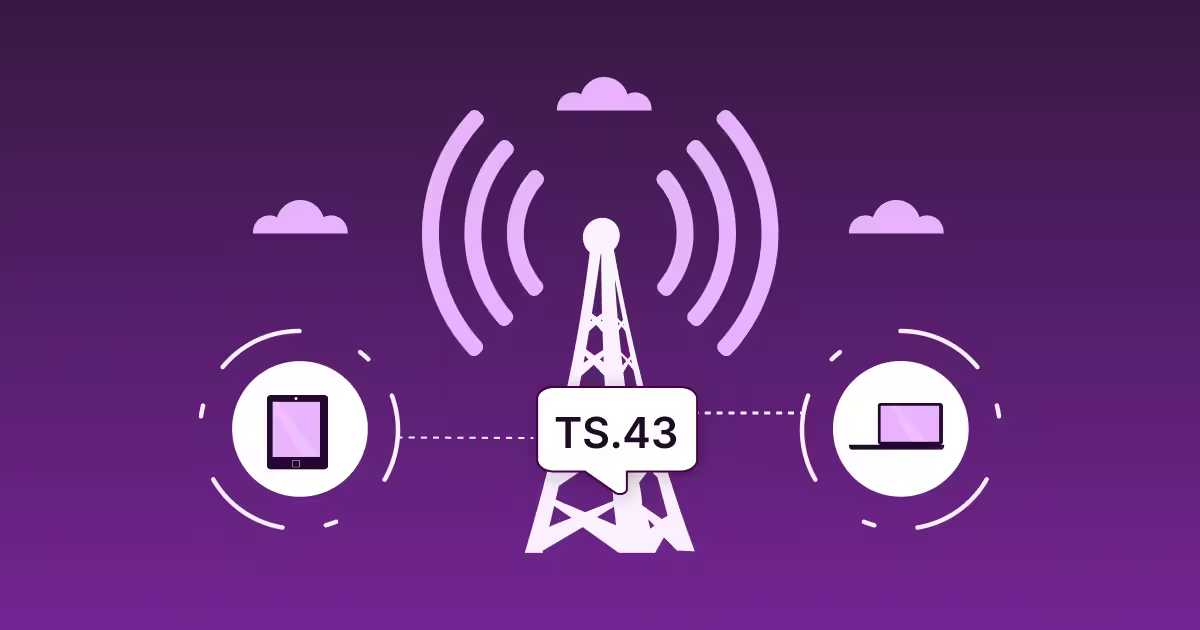
At its core, TS.43 defines how devices securely check what services they are entitled to use, based on subscription, device type, and network readiness. But the real value of TS.43 is not just technical correctness. The real value is cost reduction, faster launches, better roaming experience, and smoother OEM relationships.
In this article, we focus on the business benefits of TS.43 entitlement servers, not protocol theory.
Cost Reduction: Fewer Manual Processes, Fewer Support Tickets
One of the biggest hidden costs for telecom operators is manual provisioning and customer support overhead.
Without a TS.43-compliant entitlement server:
- Services are often provisioned statically
- Device configuration issues lead to repeated support calls
- SIM swaps and re-provisioning become common
- New services require manual backend updates
With TS.43 entitlement in place:
- Devices self-activate services dynamically
- Entitlement checks happen automatically at device boot or service enablement
- Services are granted or revoked based on real subscription state
- Many activation failures never reach customer support
For operators, this means:
- Lower operational expenditure
- Fewer first-line and second-line support tickets
- Reduced dependency on manual provisioning workflows
- Faster issue resolution without human intervention
In large networks, even a small reduction in activation-related support calls translates directly into millions in annual savings.
(Read about GSMA TS.43 Best Practices for architecting a scalable Entitlement System)
Faster Service Launch: From Months to Days
Launching a new service is rarely just about the network being ready. It usually involves:
- Device compatibility testing
- OEM validation
- Provisioning workflows
- Policy alignment across systems
TS.43 entitlement servers simplify this dramatically.
Instead of hard-coding service availability into SIM profiles or device firmware, operators can:
- Define entitlement rules centrally
- Enable services dynamically based on subscription and device type
- Roll out new services without replacing SIMs or touching devices
This is especially critical for:
- VoWiFi and VoLTE rollouts
- eSIM-based offerings
- Companion device plans
- Silent network authentication services
(See Entitlement Server Use Cases here)
With TS.43, operators can pilot a service with a small user group, refine policies, and scale nationwide without rebuilding provisioning logic each time.
Time-to-market becomes a competitive advantage, not a bottleneck.
Roaming Stability: Fewer Surprises for Traveling Subscribers
Roaming remains one of the most visible points of failure for end users.
Many roaming complaints are not caused by billing or coverage, but by entitlement mismatches:
- VoLTE works at home but fails abroad
- VoWiFi disappears unexpectedly
- Companion devices stop working when roaming
- eSIM activation behaves inconsistently
A TS.43 entitlement server helps operators manage this more predictably by:
- Applying roaming-aware entitlement logic
- Preventing services from activating where IMS support is absent
- Ensuring devices fall back gracefully instead of failing silently
- Maintaining consistent authentication behavior even on foreign networks
While TS.43 cannot force a visited network to support IMS, it prevents entitlement confusion and reduces customer-visible failures.
For operators, this leads to:
- Fewer roaming-related complaints
- Clearer customer expectations
- Better perceived network reliability
- Stronger roaming partner accountability
OEM Alignment: Fewer Certification Delays, Better Device Support
Modern devices, especially from major OEMs, expect standards-compliant entitlement behavior.
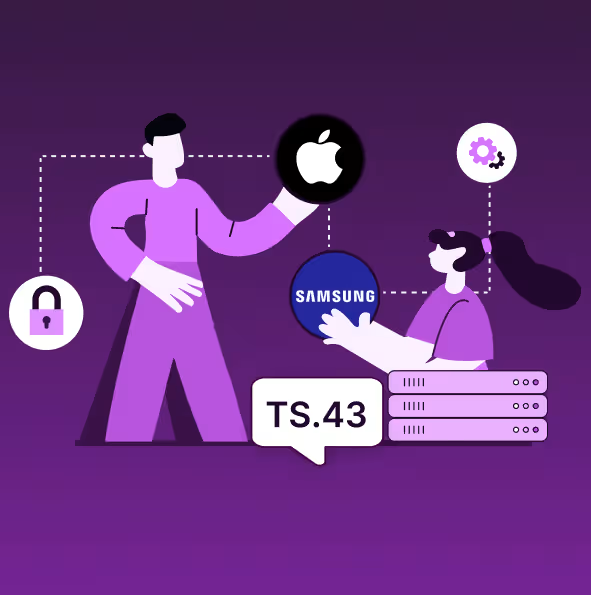
Apple, Samsung, and other leading manufacturers increasingly rely on TS.43-aligned entitlement flows for:
- VoLTE and VoWiFi activation
- eSIM onboarding
- Companion device pairing
- Silent authentication features
Operators without a compliant entitlement server often face:
- OEM certification delays
- Device-specific workarounds
- Inconsistent behavior across device models
- Higher engineering effort per OEM
A TS.43 entitlement server provides:
- A standardized interface OEMs already understand
- Predictable device behavior across markets
- Faster certification cycles
- Easier onboarding of new device models
From a business standpoint, this means:
- Faster access to new flagship devices
- Lower OEM integration costs
- Fewer post-launch device issues
- Stronger partnerships with device manufacturers
(See TS.43 deployment checklist for OEMs)
Strategic Flexibility: One Platform, Many Services
Beyond individual benefits, TS.43 entitlement servers give operators something more important: strategic flexibility.
With a single entitlement framework, operators can support:
- Primary phones
- Companion devices
- Tablets and wearables
- IoT and enterprise devices
- Silent authentication and number verification use cases (see how TS.43 relates to Silent Authentication)
All without duplicating provisioning logic across systems.
This flexibility allows operators to:
- Experiment with new business models
- Bundle services dynamically
- Adjust policies without infrastructure changes
- Scale offerings across consumer, enterprise, and IoT segments
In a market where differentiation is shrinking, this agility matters.
Why TS.43 Delivers Business Value, Not Just Technical Compliance
It is easy to think of TS.43 as “just another GSMA specification.” In reality, it is a commercial enabler disguised as a technical standard.
Operators that implement TS.43 entitlement servers effectively see:
- Lower operational costs
- Faster service launches
- Improved roaming experience
- Better OEM alignment
- Stronger foundation for future services
Those that delay adoption often pay for it through higher support costs, slower launches, and fragmented device behavior.
Final Thoughts: TS.43 as a Business Decision, Not an Engineering One
The benefits of a TS.43 entitlement server go far beyond protocol compliance. They touch cost structure, customer onboarding experience, partner relationships, and revenue agility.
For telecom operators looking to scale eSIM, improve roaming reliability, support OEM expectations, and reduce operational friction, TS.43 is no longer optional.
It is the foundation for running a modern, device-rich, service-driven telecom business.
FAQs
What business problems does a TS.43 entitlement server solve for telecom operators?
A TS.43 entitlement server solves key operational challenges such as manual provisioning, device-specific configurations, roaming service failures, and slow service launches. It enables dynamic, policy-based activation for services like VoLTE, VoWiFi, eSIM, and companion devices, reducing costs and improving service reliability at scale.
How does a TS.43 entitlement server reduce operational and support costs?
By automating service eligibility checks and activation, a TS.43 entitlement server minimizes failed activations, misconfigurations, and roaming-related issues. This leads to fewer customer support tickets, lower operational overhead, and reduced dependency on manual provisioning workflows.
Does implementing TS.43 help operators launch new services faster?
Yes. TS.43 allows operators to introduce new services through software and policy updates instead of physical SIM changes or device recalls. This significantly shortens time-to-market for offerings like eSIM plans, wearables, multi-device subscriptions, and silent authentication.
Why do Apple and Samsung require TS.43-compliant entitlement servers?
Apple and Samsung rely on GSMA TS.43 to ensure consistent, secure, and automated service activation for IMS, eSIM, and companion-device features. A compliant entitlement server reduces OEM certification delays, avoids device-specific workarounds, and ensures smoother launches across flagship devices. (See how entitlement server supports apple and samsung devices)
Is a TS.43 entitlement server worth the investment for mid-size or regional operators?
Yes. Even mid-size and regional operators benefit from TS.43 by lowering long-term operational costs, improving roaming reliability, supporting OEM requirements, and future-proofing their network for multi-device and eSIM growth. The return on investment typically comes from reduced support costs, faster launches, and higher customer satisfaction.