.png)
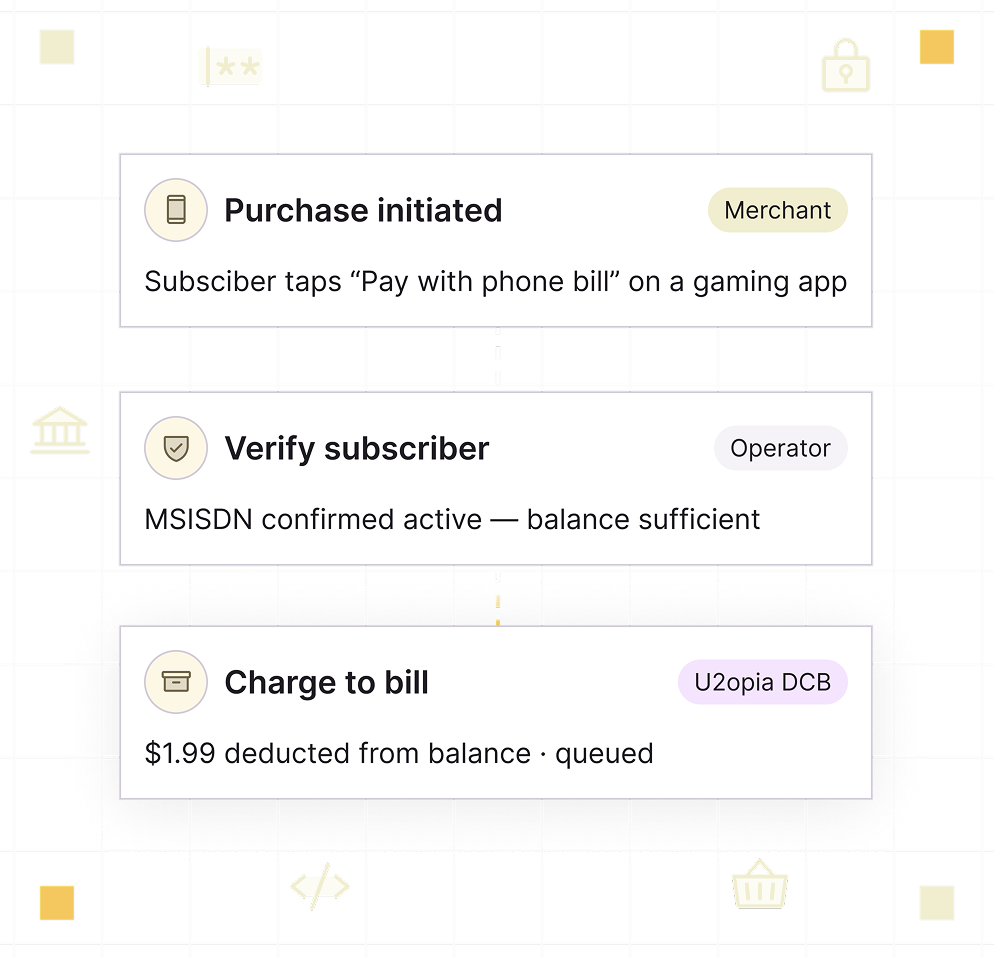
U2opia's DCB platform connects merchants with global mobile operators through a single API, enabling secure, one-click payments and seamless carrier settlement.


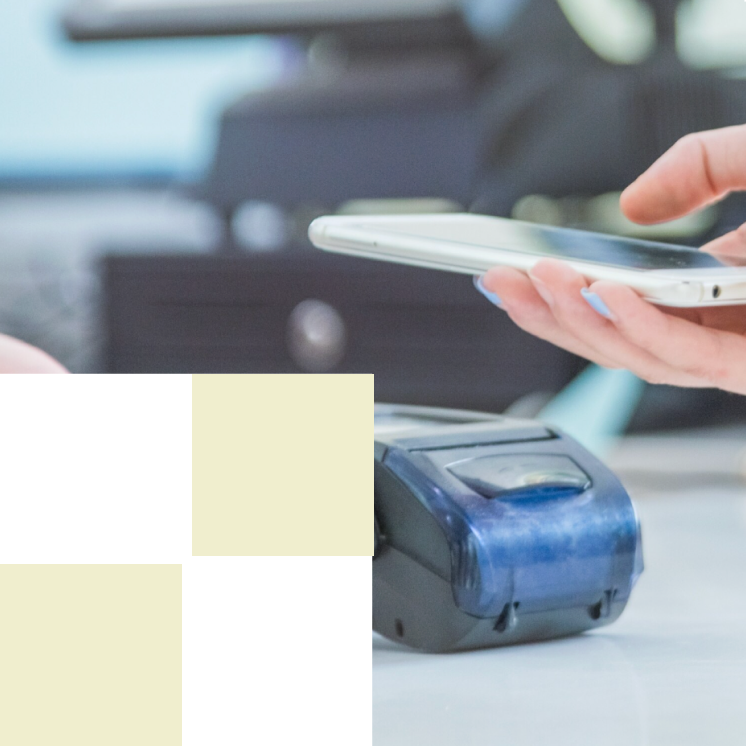
Growing demand for alternative payment methods across digital commerce.

Driven by smartphone adoption, digital subscriptions, gaming, and mobile-first consumers.
.png)
Mobile gaming remains the largest Direct Carrier Billing use case, powering in-app purchases and digital content payments.
.png)
Direct Carrier Billing helps businesses reach customers who don't have access to credit cards or bank accounts.
.png)





.png)
.png)
.png)



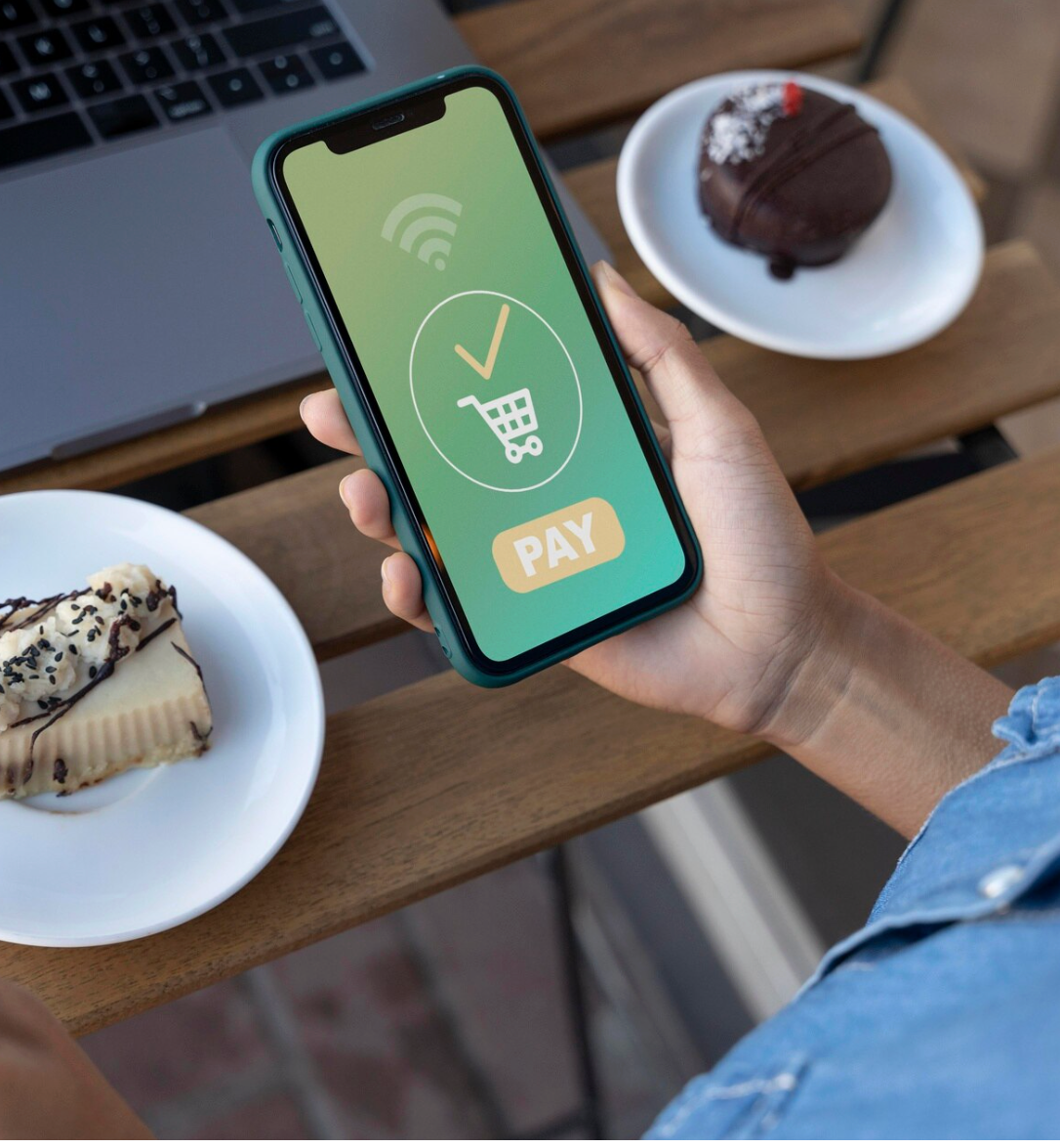
What is Direct Carrier Billing (DCB)?
Direct Carrier Billing (DCB) is a payment method that lets mobile subscribers purchase digital goods and services — games, apps, OTT subscriptions, digital content — and have the cost charged directly to their mobile phone bill or deducted from their prepaid balance. No credit card, debit card, or bank account is required. The consumer authenticates through their mobile number and the charge is applied through their mobile operator. DCB is also called 'charge to phone bill', 'operator billing', 'mobile carrier billing', or 'telco billing'. The global DCB market was estimated at $53.38 billion in 2026, growing to $97.77 billion by 2031 at a 12.84% CAGR. (Mordor Intelligence, 2026)
How does Direct Carrier Billing work technically?
DCB works through a three-party flow: (1) The consumer selects a digital product and chooses 'Pay with phone bill'; (2) The merchant calls the DCB API with the consumer's phone number and purchase amount; (3) The API routes the billing request to the consumer's mobile operator, which verifies the subscriber identity via MSISDN, applies the charge to the mobile bill or prepaid balance, and returns a payment confirmation. U2opia's platform manages all operator connections, billing protocol translation, fraud controls, and settlement — the merchant integrates a single REST API that covers all 104+ operator networks.
Why is Direct Carrier Billing critical for emerging markets?
Emerging markets in Africa, Southeast Asia, MENA, and South Asia have high mobile penetration (often exceeding 80%) but low banking penetration — credit card penetration is below 10–15% in many markets. The World Bank estimates 1.4 billion adults remain unbanked globally, the majority in these regions. DCB is the only digital payment method that reaches these consumers — they have a mobile phone and a subscriber relationship with their operator, and that is all DCB requires. For operators in these markets, DCB is a high-margin revenue stream that monetises an existing subscriber base. This is U2opia's core market — 16+ years of direct operator relationships in exactly these geographies.
What is Artificially Inflated Traffic (AIT) in DCB and how is it prevented?
AIT (Artificially Inflated Traffic) is the primary fraud risk in DCB — automated systems generate fake transactions to harvest operator revenue share payouts. It costs the industry hundreds of millions annually. U2opia's AIT prevention works at the network layer (not just the API surface) because direct MNO relationships give U2opia access to subscriber behaviour signals and device fingerprints that API-only aggregators cannot see. Controls include real-time velocity monitoring, device fingerprinting, subscriber behavioural anomaly detection, double opt-in for high-value tiers, per-subscriber transaction limits, MSISDN verification, and real-time alerting with automatic transaction suspension.
How does U2opia's DCB commercial model work for MNOs?
U2opia operates on a revenue-share model — zero upfront investment from the operator. The operator provides network access and subscriber billing infrastructure. U2opia provides merchant demand, the REST API platform, fraud controls, and settlement management. On every DCB transaction, the operator earns 15–30% revenue share (depending on market and content category). U2opia earns only when the operator earns — aligned incentives throughout. Operators do not need to acquire merchants, manage API integrations, or handle cross-border settlement. U2opia handles all of it.
How does U2opia DCB differ from Boku or Bango?
Boku and Bango are primarily focused on developed markets — US, Europe, Japan — and major global brands such as Spotify, Netflix, and Microsoft. U2opia's differentiation is depth in Africa, Southeast Asia, MENA, and South Asia, where U2opia has maintained direct MNO relationships for 16+ years across 104+ operator networks. These are markets Boku and Bango have limited penetration in. Additionally, U2opia bundles DCB with SilentAuth+ (TS.43 network authentication) and Message Central (omnichannel messaging) on a single platform — a combination Boku and Bango do not offer.
What is the difference between prepaid and postpaid DCB?
In prepaid DCB, the purchase amount is deducted immediately from the subscriber's prepaid mobile balance at the point of purchase — instant, real-time billing. The subscriber must have sufficient balance for the transaction to complete. In postpaid DCB, the charge is added to the subscriber's monthly mobile bill and collected at billing cycle end — allowing higher transaction values and recurring subscriptions. In U2opia's core markets (Africa, South Asia), over 80% of subscribers are on prepaid plans, so prepaid DCB is the primary flow. U2opia's platform supports both, automatically routing based on the subscriber's plan type.
How does a merchant integrate U2opia's DCB API?
Merchant DCB integration with U2opia requires a single REST API. The integration flow: (1) Merchant calls U2opia DCB initiation endpoint with subscriber MSISDN and purchase amount; (2) U2opia identifies the operator network and routes the billing request; (3) Operator verifies the subscriber and applies the charge; (4) U2opia returns a payment confirmation or failure code to the merchant. U2opia manages all operator onboarding, billing protocol differences across networks (SMPP, HTTP, SS7-adjacent), settlement, and reconciliation. Merchants do not need individual operator agreements or technical integrations for each network.