.png)
User-initiated. Phishing-resistant.

P2A reverses the flow. The application presents a number — a shortcode, long code, or FTEU (Free-to-End-User) number — and the user's device sends an MO SMS to it. The application receives the message, reads the sender's phone number, and confirms it matches the account. No code is generated. No code is transmitted. No code can be stolen.
When the app has SMS permissions on Android, P2A can be zero-click: the app triggers the MO SMS automatically in the background. The user never sees an authentication step at all.
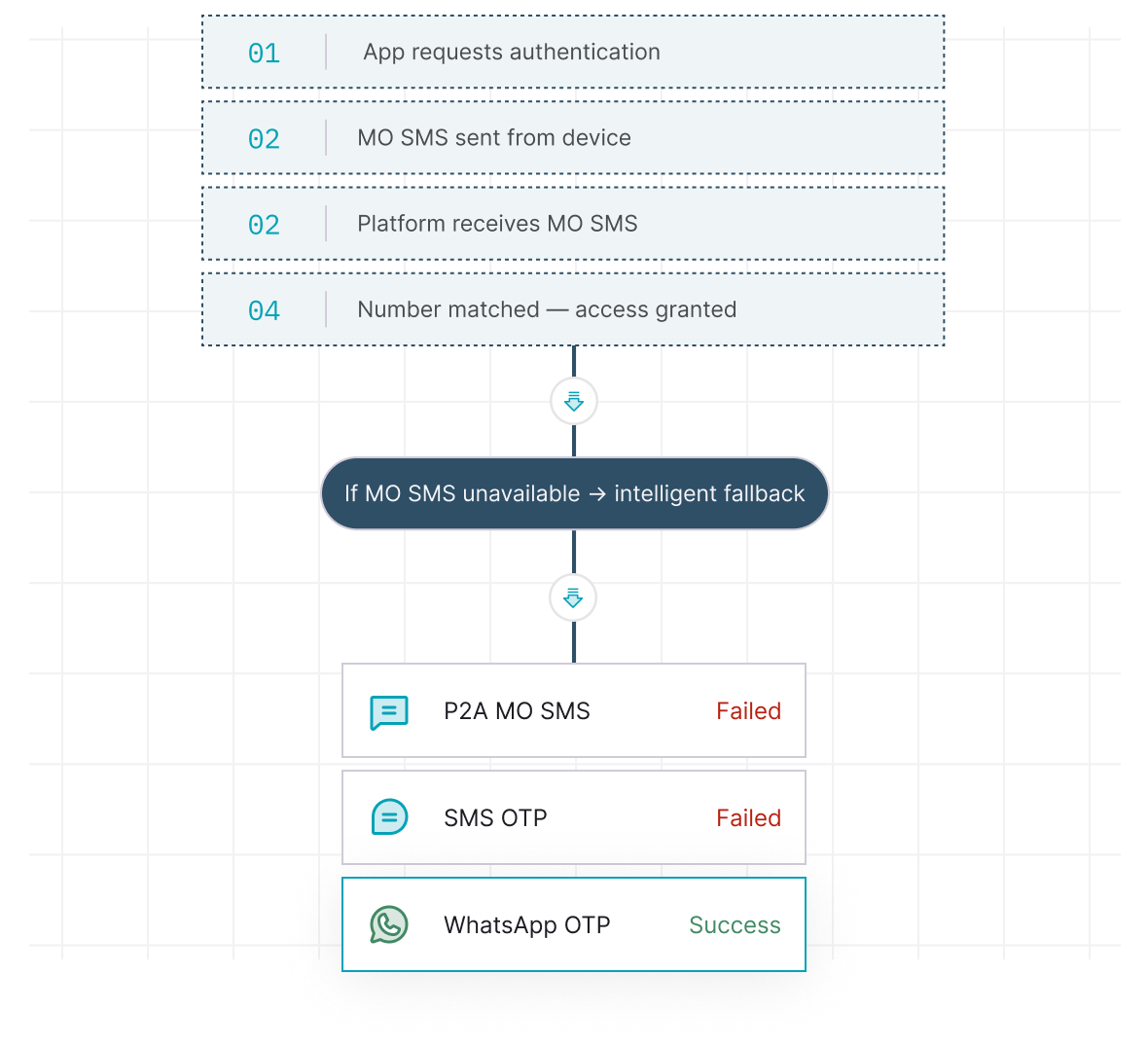
P2A is particularly effective in markets where inbound A2P SMS delivery is unreliable. Because the MO SMS travels outbound from the user's device, it takes a different — and typically more reliable — network path than the inbound A2P route that OTP delivery depends on.
U2opia's P2A implementation adds intelligent fallback to OTP channels for cases where MO SMS is blocked by the user's device settings, carrier restrictions, or iOS permission constraints — so the enterprise never hits a dead end.



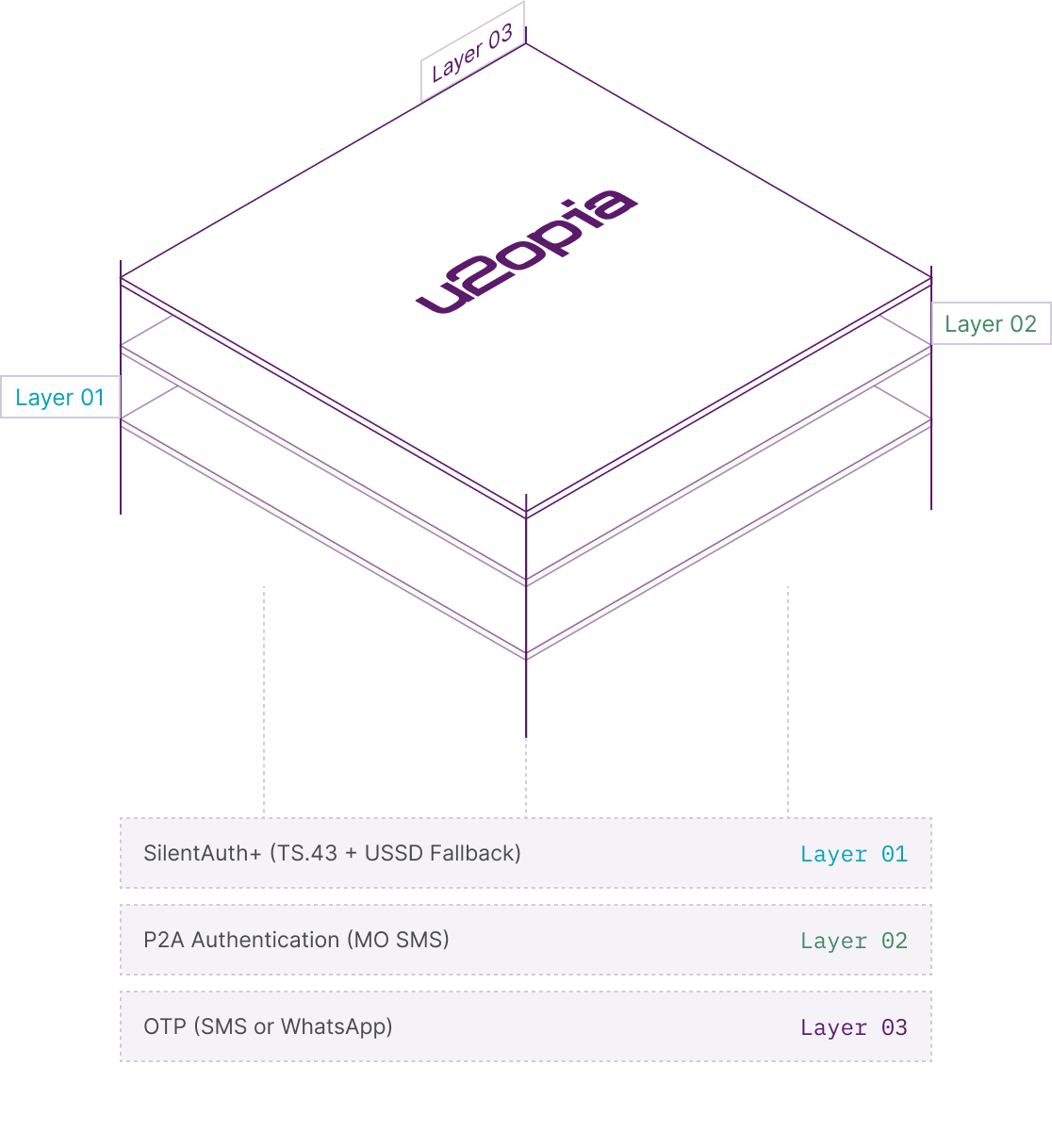
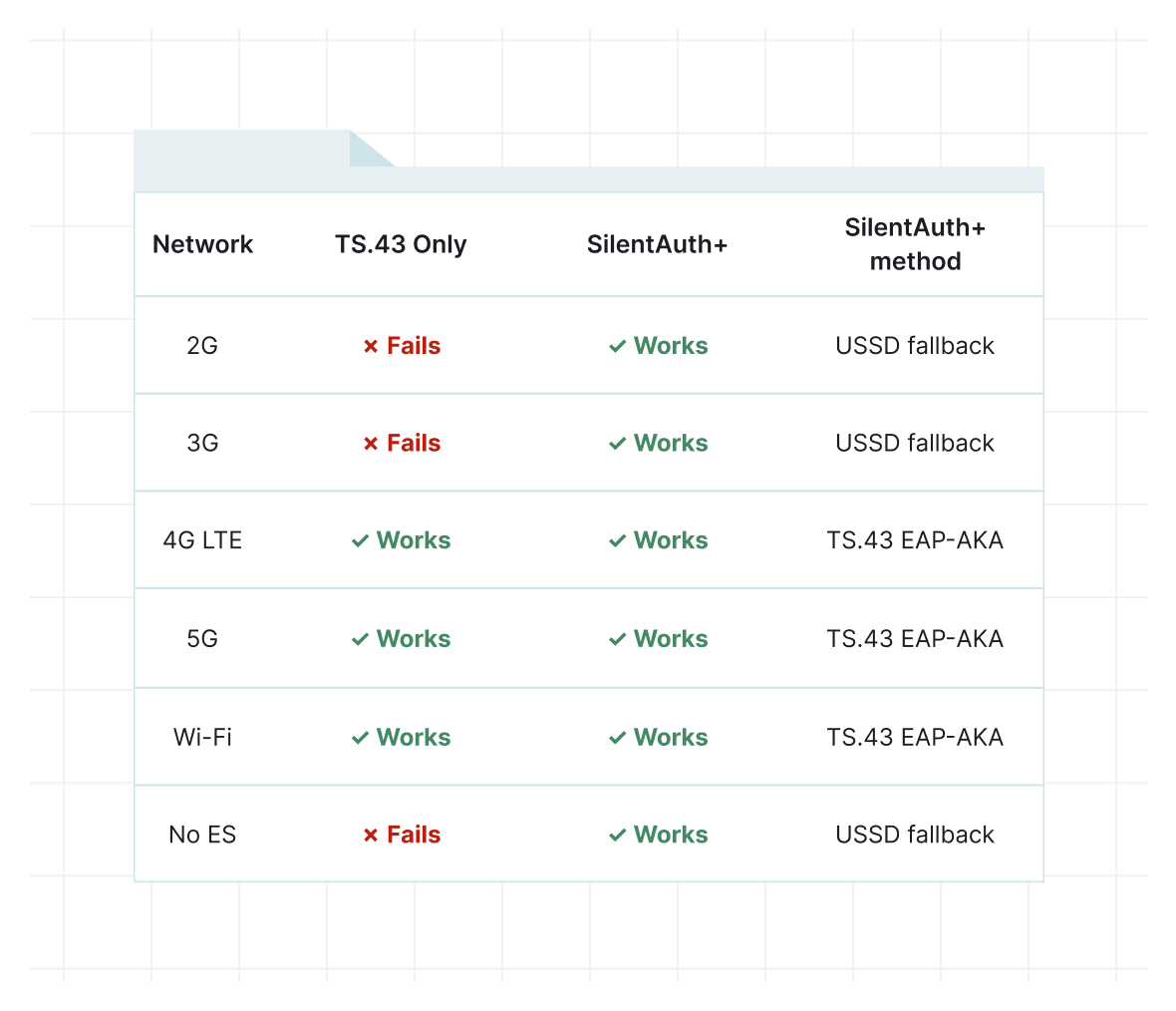
The recommended approach for enterprises with high security requirements: use SilentAuth+ as the primary authentication layer where possible (no app permission, fully silent, cryptographically strongest), with P2A as a fallback when SilentAuth+ cannot complete, and A2P SMS OTP as a final fallback. This gives you the most secure, least friction, and most complete coverage across all devices and networks.
questions answered
What is P2A Authentication?
P2A Authentication (Phone-to-App Authentication) is a mobile identity verification method where a user proves device ownership by sending an MO SMS from their phone instead of entering an OTP code. This eliminates typeable passwords and reduces phishing risk.
How is P2A Authentication different from SMS OTP?
SMS OTP sends a verification code to the user, which must be entered manually. P2A Authentication verifies the phone number through an MO SMS sent from the device itself, eliminating code entry and reducing phishing vulnerabilities.
Is P2A Authentication more secure than SMS OTP?
Yes. P2A Authentication removes the typeable verification code that attackers can intercept or socially engineer users into sharing. Authentication is based on device possession rather than code entry.
What is MO SMS Authentication?
MO SMS Authentication uses a Mobile-Originated SMS sent from a user's device as proof of phone ownership. P2A Authentication is one of the most common implementations of MO SMS authentication.
What happens if P2A Authentication cannot complete?
Modern P2A platforms automatically switch to alternative verification channels such as SMS OTP or WhatsApp OTP, ensuring authentication can still be completed successfully.
Which industries use P2A Authentication?
P2A Authentication is used by banks, fintech companies, eCommerce platforms, gaming apps, telecom operators, and enterprise SaaS businesses that require secure user verification.
Can P2A Authentication replace SMS OTP?
Yes. Many organizations deploy P2A Authentication as a more secure alternative to SMS OTP because it reduces phishing risks, improves conversion rates, and removes manual code entry.