.png)
for Operators
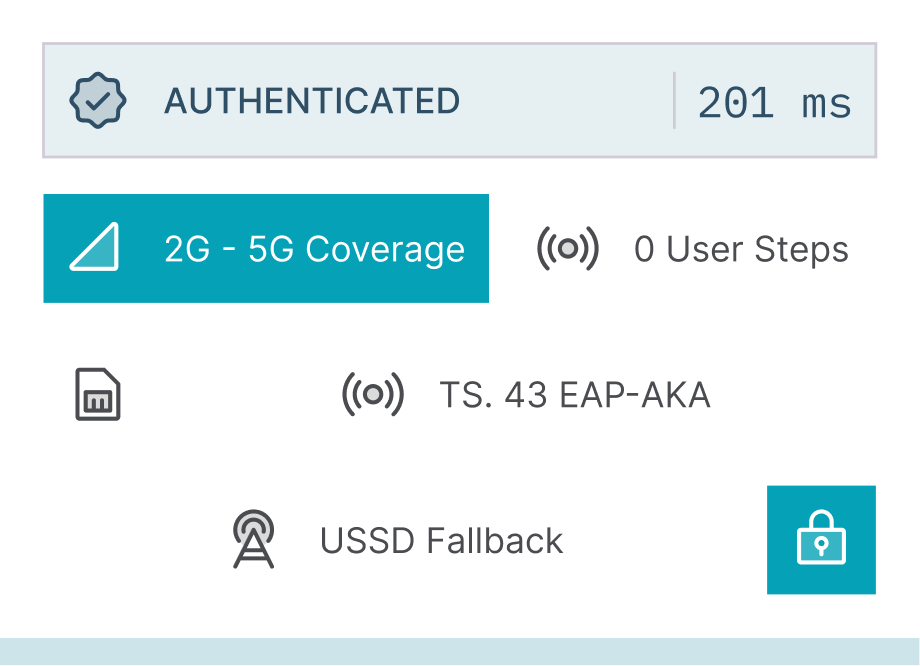
Every MNO continuously authenticates subscriber SIM cards across its network. TS.43 and CAMARA give operators the standardised infrastructure to expose that authentication intelligence as a revenue-generating API — for the first time, with full 2G–5G coverage via USSD fallback.



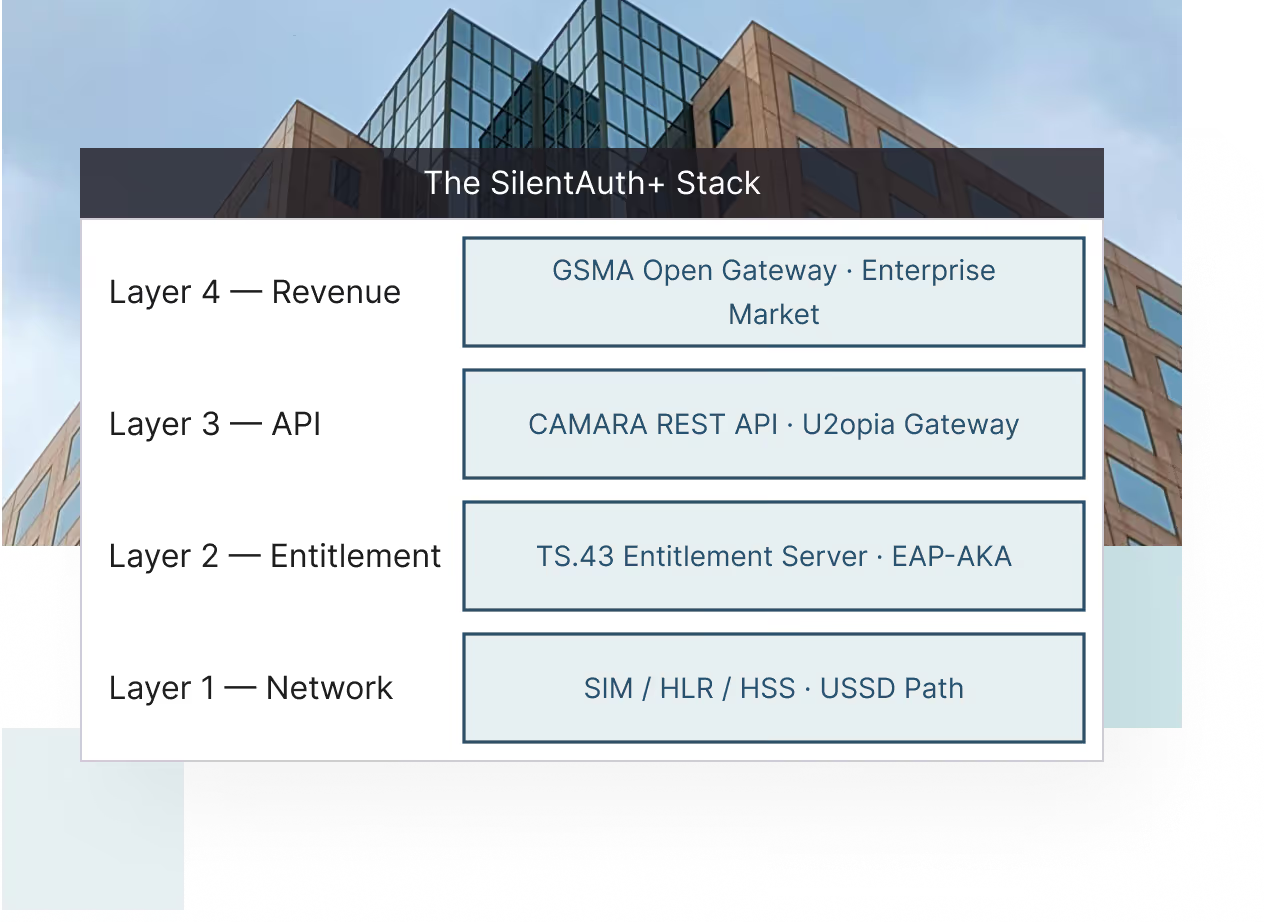
What is Silent Authentication?
Silent Authentication verifies mobile users without sending an OTP or requiring any user action. Authentication happens at the mobile network level using SIM credentials.
How does Silent Authentication work?
Silent Authentication uses network-based identity verification, allowing applications to confirm a user's phone number through the mobile operator without displaying an OTP screen.
What is TS.43 Authentication?
TS.43 is a GSMA standard that enables silent authentication using EAP-AKA cryptographic verification through mobile network infrastructure.
Is Silent Authentication more secure than SMS OTP?
Yes. Silent Authentication eliminates OTP interception, phishing attacks, and code-sharing risks because no verification code is generated or entered.
What is the difference between Silent Authentication and OTP?
OTP authentication relies on a code sent to the user. Silent Authentication verifies the user directly through the mobile network without requiring any code entry.
What is USSD Fallback in Silent Authentication?
USSD fallback allows authentication to continue on devices or networks where TS.43 authentication cannot complete, extending coverage to older mobile devices.
Which businesses use Silent Authentication?
Banks, fintech companies, telecom operators, digital wallets, super apps, eCommerce platforms, and enterprise applications use Silent Authentication to improve security and user experience.