.png)
User-initiated. Phishing-resistant.

P2A reverses the flow. The application presents a number — a shortcode, long code, or FTEU (Free-to-End-User) number — and the user's device sends an MO SMS to it. The application receives the message, reads the sender's phone number, and confirms it matches the account. No code is generated. No code is transmitted. No code can be stolen.
When the app has SMS permissions on Android, P2A can be zero-click: the app triggers the MO SMS automatically in the background. The user never sees an authentication step at all.
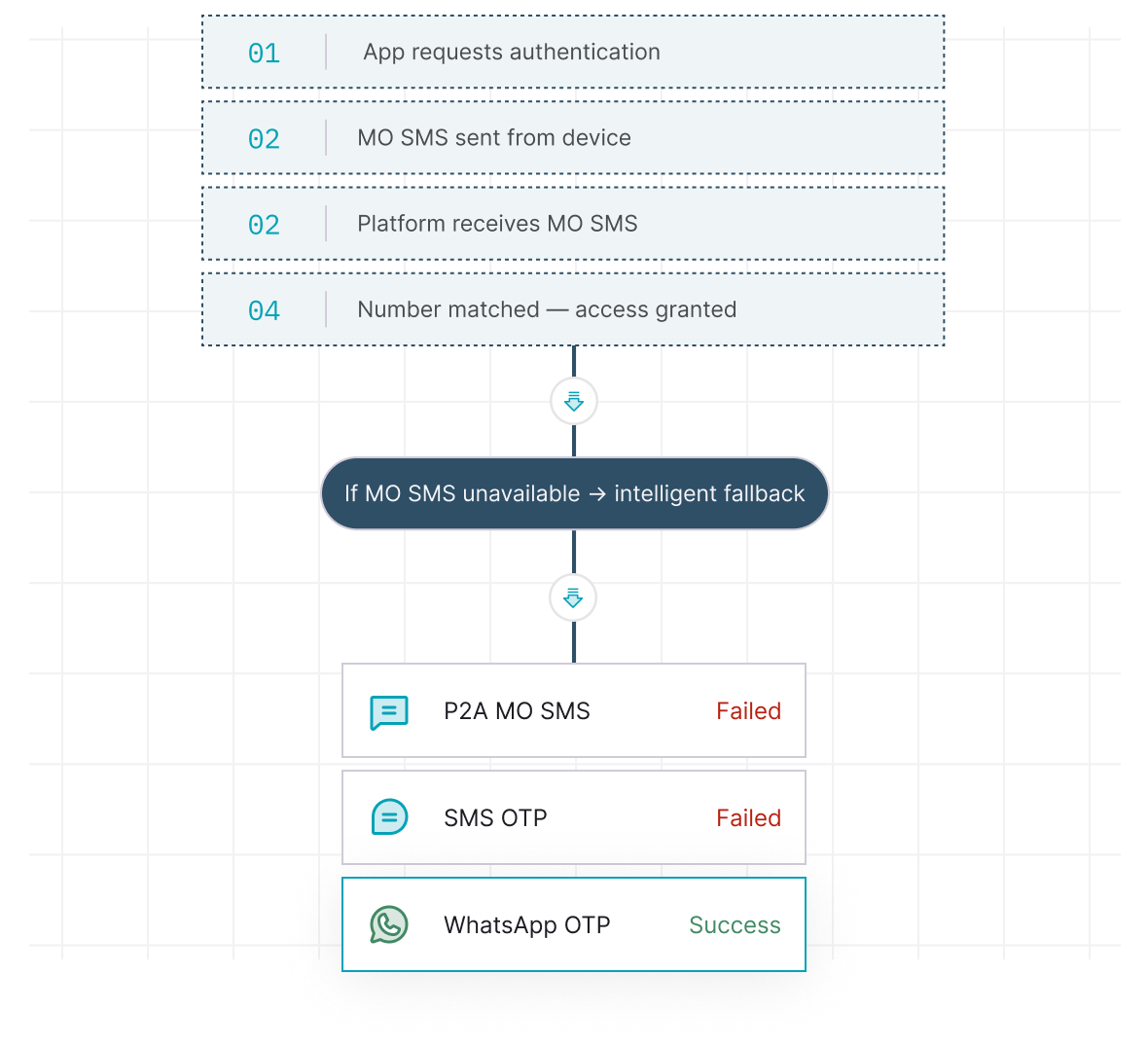
P2A is particularly effective in markets where inbound A2P SMS delivery is unreliable. Because the MO SMS travels outbound from the user's device, it takes a different — and typically more reliable — network path than the inbound A2P route that OTP delivery depends on.
U2opia's P2A implementation adds intelligent fallback to OTP channels for cases where MO SMS is blocked by the user's device settings, carrier restrictions, or iOS permission constraints — so the enterprise never hits a dead end.



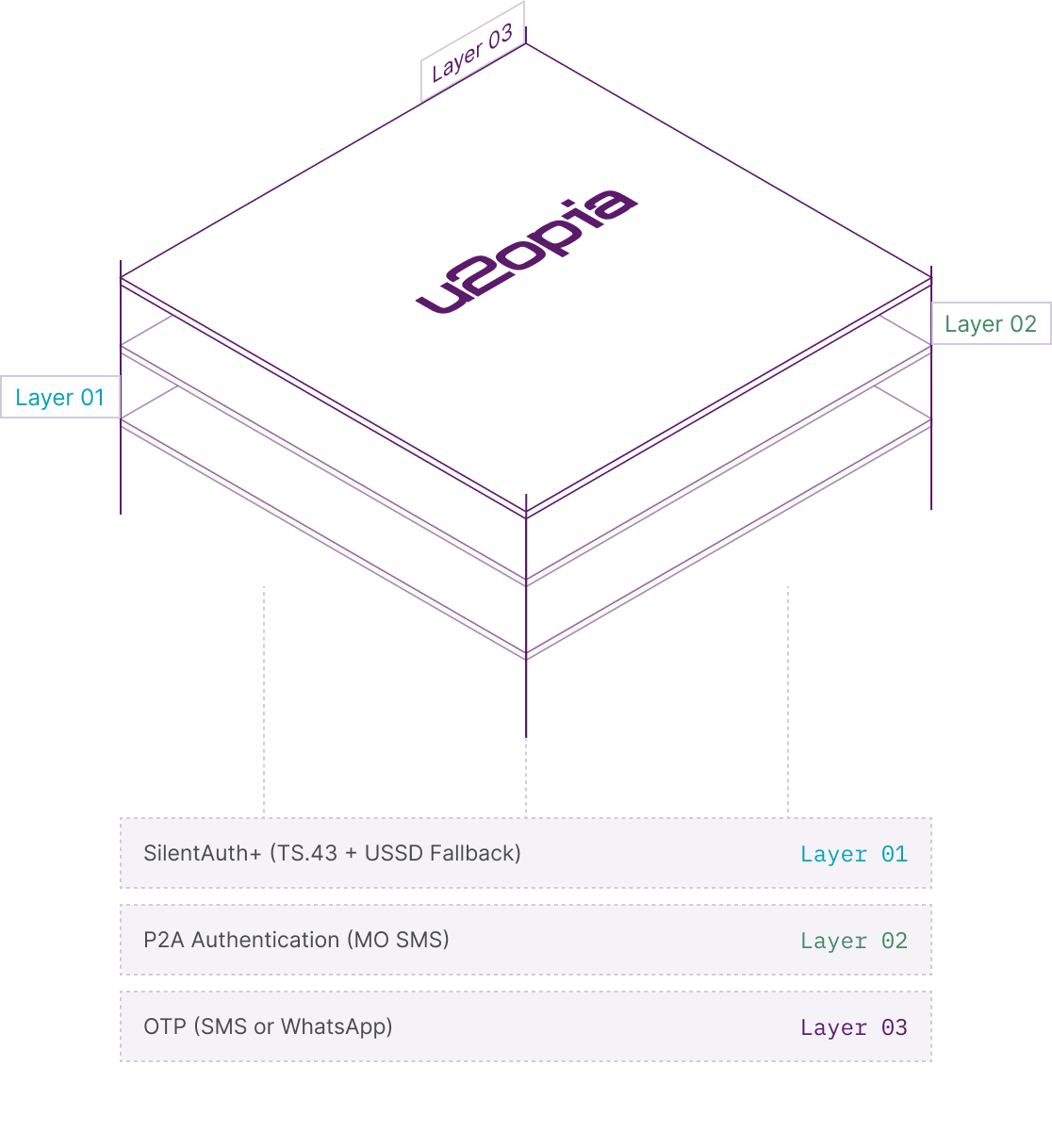
The recommended approach for enterprises with high security requirements: use SilentAuth+ as the primary authentication layer where possible (no app permission, fully silent, cryptographically strongest), with P2A as a fallback when SilentAuth+ cannot complete, and A2P SMS OTP as a final fallback. This gives you the most secure, least friction, and most complete coverage across all devices and networks.
questions answered
How can telcos monetise authentication APIs?
Telcos can monetise authentication by exposing network-based identity APIs to enterprises, generating revenue from user verification instead of relying on declining SMS OTP traffic. This creates a new high-margin API revenue stream.
What is TS.43 authentication and why does it matter for operators?
TS.43 is a GSMA standard that enables SIM-based authentication using EAP-AKA across mobile and Wi-Fi networks. It allows operators to act as trusted identity providers instead of relying on third-party authentication methods.
How does silent authentication help telcos reclaim authentication from OTT players?
Silent authentication shifts identity verification from apps and SMS OTP back into the mobile network. This allows telcos to control authentication flows and capture value from every login and transaction.
What is Number Verify 2 (NV2) and how is it used by telcos?
Number Verify 2 is a GSMA Open Gateway API that confirms a phone number matches the active SIM card. Telcos can offer NV2 as a standardised API for real-time identity verification.
How does network-based authentication compare to SMS OTP?
Network-based authentication is faster, more secure, and does not require user input. Unlike SMS OTP, it is resistant to SIM swap fraud, phishing, and delivery failures.
Can telco authentication work across 2G, 3G, 4G, and 5G networks?
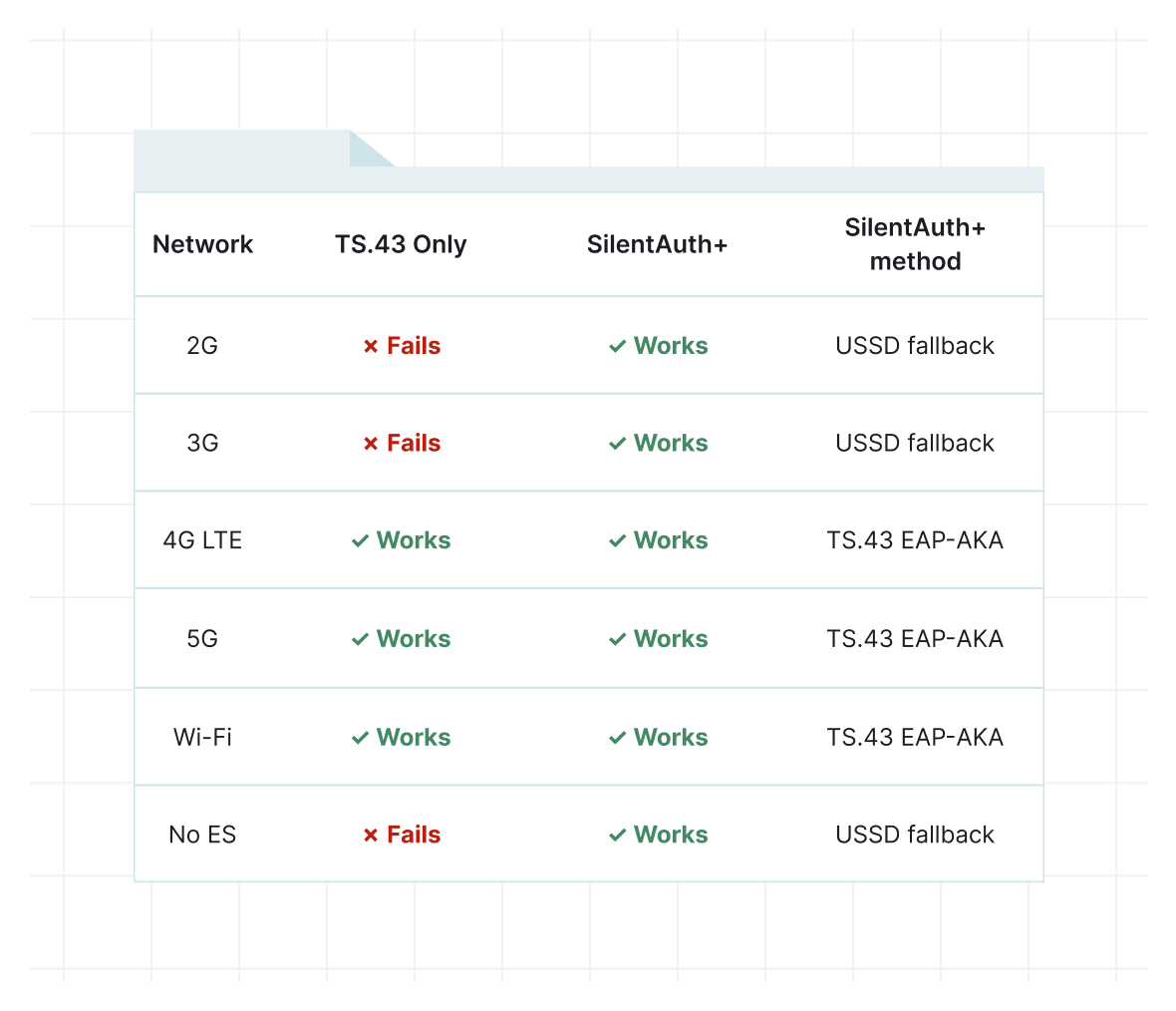
Yes, network-based authentication can work across all generations of mobile networks using a combination of TS.43, USSD fallback, and operator integrations.
How does authentication API revenue compare to SMS OTP revenue?
Authentication APIs provide scalable, usage-based revenue with higher margins, while SMS OTP revenues are declining due to fraud, regulation, and user friction.
What role do telcos play in digital identity and GSMA Open Gateway?
Telcos are positioned to become global identity providers through GSMA Open Gateway APIs like Number Verify. They can offer secure, interoperable identity services to enterprises worldwide.