CUSTOMER EXPERIENCE - MESSAGE CENTRAL CPAAS
OTP API. Bulk SMS.
WhatsApp. RCS. AI Voice.
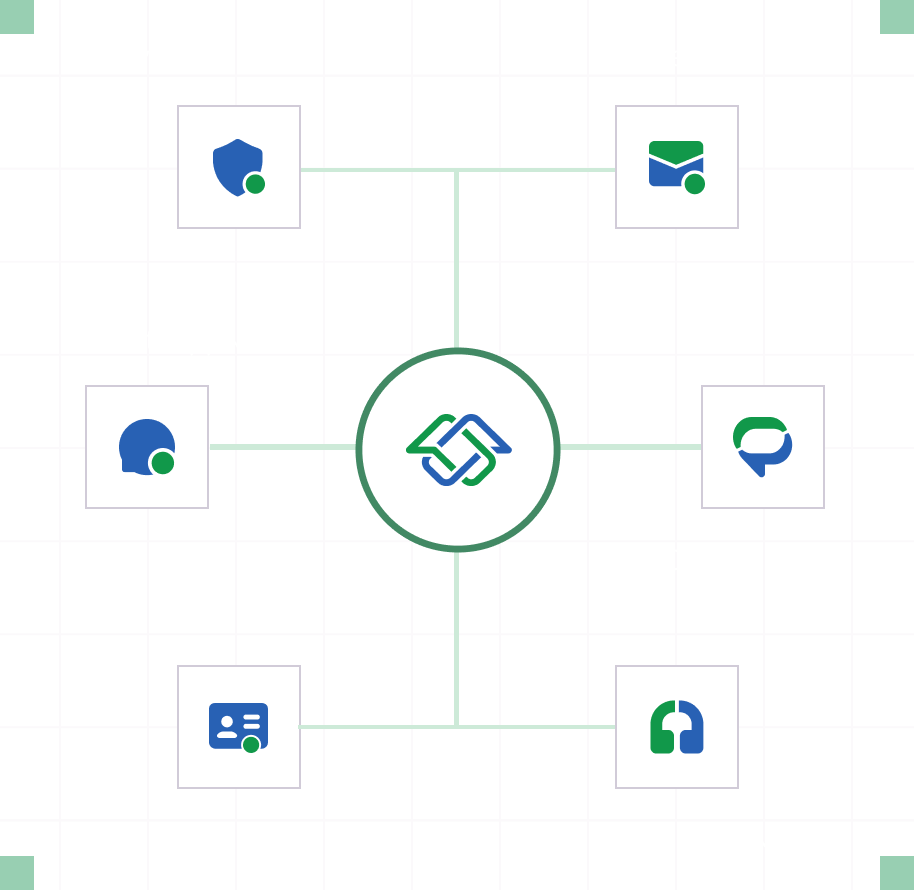
Message Central is U2opia's CPaaS platform — five products purpose-built for OTP verification, enterprise SMS, WhatsApp Business API, RCS messaging, and AI voice agent call handling. Start sending OTP in minutes, no Sender ID registration needed.
0
Sender ID required to send OTP
104+
Direct MNO connections
5
Purpose-built products
24/7
AI voice call answering
1 API
One integration
WHY MESSAGE CENTRAL
Many CPaaS platforms require five vendors for what Message Central offers.
Separate OTP verification API, bulk SMS provider, WhatsApp Business API partner, RCS messaging vendor, and AI voice agent platform each involve contracts, codebases, billing, and potential failures. Most OTP APIs need Sender ID registration, delaying your launch.
Message Central combines all five into one platform — U2opia's MNO connections across 104+ networks. One API. One dashboard.
Start for Free
OTP APIs that block you before you start
Most OTP verification APIs — including Twilio Verify — require Brand Name Sender ID registration. Verify Now has no such requirement. Send OTP via SMS or WhatsApp globally, today.
Fragmented vendors for SMS, WhatsApp, and RCS
Running separate bulk SMS, WhatsApp Business API, and RCS messaging providers means duplicate integrations, inconsistent delivery data, and no unified analytics.
Missed calls with no AI voice coverage
74% of business calls go unanswered. An AI voice agent that answers every inbound call 24/7 — booking appointments and capturing leads — is now a standard CPaaS capability. Voice Now builds it in.
AUTHENTICATION PRODUCTS
Two Products. Every Authentication Use Case.
SilentAuth+ for invisible primary authentication. P2A for acknowledgement-based secondary flows. Both built on carrier-grade infrastructure.
NETWORK-BASED

SilentAuth+

The silent network authentication API is built on GSMA TS.43 entitlement framework, leveraging EAP-AKA SIM-based authentication. It authenticates users via SIM cryptographic credentials, invisibly, in milliseconds, on any network from 2G to 5G, with a unique USSD fallback for markets where data does not reach.

TS.43 EAP-AKA
Number Verify 2
2G to 5G + Wi-Fi
USSD Fallback
SIM Swap Detection
USER-INITIATED

P2A Authentication

Person-to-Application authentication for flows requiring explicit user acknowledgement, or for operator networks without TS.43 support. Same 104+ operator infrastructure as SilentAuth+.
High-value transaction confirmation
Regulatory-mandated explicit consent
Networks without TS.43 support
Hybrid SilentAuth+ plus P2A flows
INDUSTRIES WE SERVE
Authentication Built on The Network, Not on Messages
The fundamental flaw of SMS OTP is using a communication channel as a security mechanism. Carrier-grade authentication removes that dependency entirely.
01
SIM cryptography, not messages
SilentAuth+ uses the cryptographic credentials baked into the SIM card. The same infrastructure operators use to authenticate devices onto networks. There is nothing to intercept because there is no message sent.
02
Network, not application
Authentication happens at the mobile operator network layer, coordinated by u2opia Entitlement Server. No app required. No internet dependency. No smartphone needed. Just a SIM card and a signa
03
16+ years of direct operator trust
Carrier-grade auth only works through direct operator connections. u2opia 15 years of MNO relationships and Entitlement Server deployments across 104+ networks is the infrastructure behind every authentication.
GLOBAL COVERAGE
Carrier-grade Authentication Where it Matters Most
Direct operator connections across four regions. 2G through 5G with USSD fallback. Where competitors have gaps, u2opia has depth.
Sub-Saharan Africa
Kenya, Nigeria, South Africa, Ghana, Tanzania and beyond. 2G/3G USSD fallback for rural markets. Key advantage over IPification and Shush.
Kenya
Nigeria
South Africa
+12 More
Southeast Asia
Indonesia, Thailand, Philippines, Malaysia, Vietnam. Mixed 2G/3G/4G/5G environments. High prepaid penetration.
Indonesia
Thailand
Philippines
+12 More
Middle East and North Africa
Saudi Arabia, UAE, Egypt, Jordan, Kuwait. High 4G/5G penetration. Strong financial services adoption.
Saudi Arabia
UAE
Egypt
+12 More
South Asia
ndia, Pakistan, Bangladesh, Sri Lanka. Massive mobile bases with significant 2G/3G legacy networks requiring USSD fallback.
India
Pakistan
Bangladesh
+12 More
Talk To An Expert
COMPETITIVE ANALYSIS
How SilentAuth+ Compares to IPification and Shush
Both IPification and Shush are silent authentication providers, but their technical approach and geographic reach differ significantly from SilentAuth+.

IPification relies on IP-address matching, which requires mobile data and does not work on Wi-Fi or 2G/3G. Shush is designed for mature 4G/5G markets. Neither covers the full 2G-to-5G and Wi-Fi range with USSD fallback that SilentAuth+ delivers.

SilentAuth+ IPification Shush
Authentication method
TS.43 EAP-AKA (SIM-based)
IP address matching Network-based
Works on Wi-Fi
Yes SIM credentials
No — Mobile data only Limited
2G / 3G support
Yes USSD fallback
Partial — LTE+ required Partial — Aggregator model
GSMA TS.43 standard
Native
No — Proprietary No
CAMARA NV2 compliant
Yes
No Partial
Emerging market depth
Africa, SEA, MENA, South Asia
Limited Primarily developed markets
USSD fallback
Yes Unique advantage
No No
SIM swap detection
Yes
Limited Partial
SilentAuth+ IPification Shush
Authentication method

TS.43 EAP-AKA (SIM-based)
IP address matching
Network-based
Works on Wi-Fi

Yes SIM credentials
No — Mobile data only
Limited
2G / 3G support

Yes USSD fallback
Partial — LTE+ required
Partial — Aggregator model
GSMA TS.43 standard

Native
No — Proprietary
No
CAMARA NV2 compliant

Yes
No
Partial
Emerging market depth

Africa, SEA, MENA, South Asia
Limited
Primarily developed markets
USSD fallback

Yes Unique advantage
No
No
SIM swap detection

Yes
Limited
Partial
Talk To An Expert
FREQUENTLY ASKED QUESTIONS
Mobile Authentication API Questions, Answered

How can telcos monetise authentication APIs?

Telcos can monetise authentication by exposing network-based identity APIs to enterprises, generating revenue from user verification instead of relying on declining SMS OTP traffic. This creates a new high-margin API revenue stream.

What is TS.43 authentication and why does it matter for operators?

TS.43 is a GSMA standard that enables SIM-based authentication using EAP-AKA across mobile and Wi-Fi networks. It allows operators to act as trusted identity providers instead of relying on third-party authentication methods.

How does silent authentication help telcos reclaim authentication from OTT players?

Silent authentication shifts identity verification from apps and SMS OTP back into the mobile network. This allows telcos to control authentication flows and capture value from every login and transaction.

What is Number Verify 2 (NV2) and how is it used by telcos?

Number Verify 2 is a GSMA Open Gateway API that confirms a phone number matches the active SIM card. Telcos can offer NV2 as a standardised API for real-time identity verification.

How does network-based authentication compare to SMS OTP?

Network-based authentication is faster, more secure, and does not require user input. Unlike SMS OTP, it is resistant to SIM swap fraud, phishing, and delivery failures.

Can telco authentication work across 2G, 3G, 4G, and 5G networks?

Yes, network-based authentication can work across all generations of mobile networks using a combination of TS.43, USSD fallback, and operator integrations.

How does authentication API revenue compare to SMS OTP revenue?

Authentication APIs provide scalable, usage-based revenue with higher margins, while SMS OTP revenues are declining due to fraud, regulation, and user friction.

What role do telcos play in digital identity and GSMA Open Gateway?

Telcos are positioned to become global identity providers through GSMA Open Gateway APIs like Number Verify. They can offer secure, interoperable identity services to enterprises worldwide.

GET STARTED
Ready To Reach Every Mobile User?
Start with SilentAuth+ and add customer experience and payments as you grow. One platform, carrier-grade, global.